
AC Tips
Is Your AC Really Broken? 5 Things to Check Before You Call
Your AC stopped cooling. Before you worry, take 5 minutes. Sometimes the fix is something simple you can check yourself.
“Not cooling” is the #1 reason people call us. It came up on more than 4 out of 10 AC jobs our team finished from January 2025 to November 2026. And on about 1 in 11 jobs, our techs found no mechanical problem with the unit at all.
Here are 5 safe things to check first. You don’t need tools, and you never need to open the unit.
Safety first.
These checks are only about settings and looking. Don’t open any panel on the indoor or outdoor unit, touch wiring, or reset or bypass any safety switch. If you smell burning, see sparks, or hear loud buzzing, turn the AC off at the thermostat and call us.
1. Check the thermostat settings
It sounds too simple, but it happens a lot. A kid, a guest, or a power blip can change the settings. Look at the screen and check:
- The mode says Cool. Not Heat, Off, or Fan.
- The set temperature is lower than the room temperature. Try setting it 3 degrees lower than the room.
- The fan says Auto. If it says On, the fan blows all the time, even when the AC isn’t cooling. That air can feel warm.
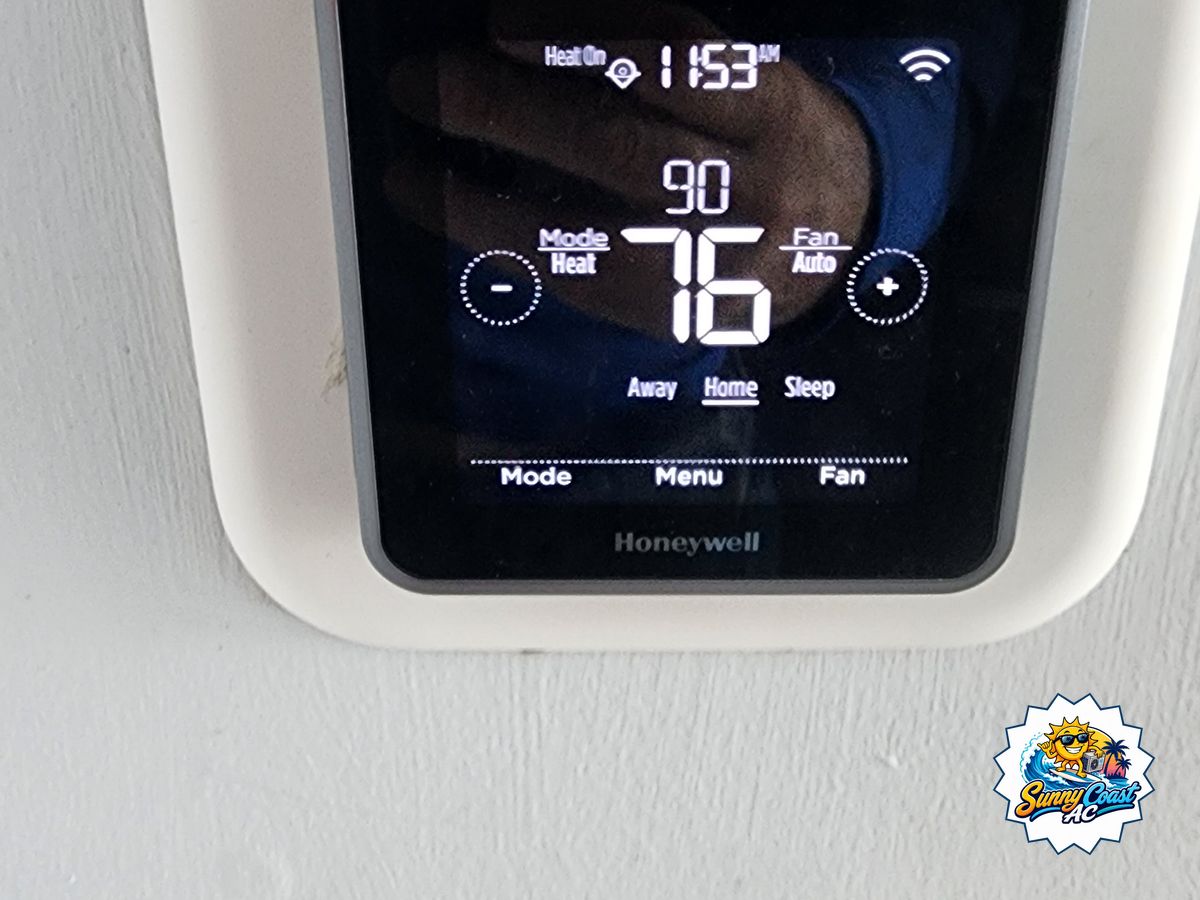
After you change a setting, give it 5 to 10 minutes. Many systems wait a few minutes before they start again. That delay protects the outdoor unit.
2. Check the thermostat’s power
Is the screen blank or dim? Many thermostats run on AA or AAA batteries. When the batteries die, the thermostat can’t tell your AC to turn on.
- Check your thermostat’s manual to see how to reach the batteries. Don’t touch the wires behind it.
- Put in fresh batteries of the same type.
Still blank after new batteries? Or your thermostat has no batteries? Then call us. A blank screen can mean a blown fuse, a wiring problem, or a safety switch that shut the system off. Those are jobs for a pro.
3. Check the air filter
A dirty filter is like trying to breathe through a pillow. Air can’t get through, so the AC works harder and cools less. In bad cases, the indoor coil can freeze into a block of ice.
- Find the filter. It’s usually behind a return grille on a wall or ceiling, or in a slot by the indoor unit.
- Hold it up to a light. If you can’t see light through it, or it’s gray and dusty, change it.
- Buy the size printed on the edge (like 16x20x1). Point the arrow on the frame toward the unit.
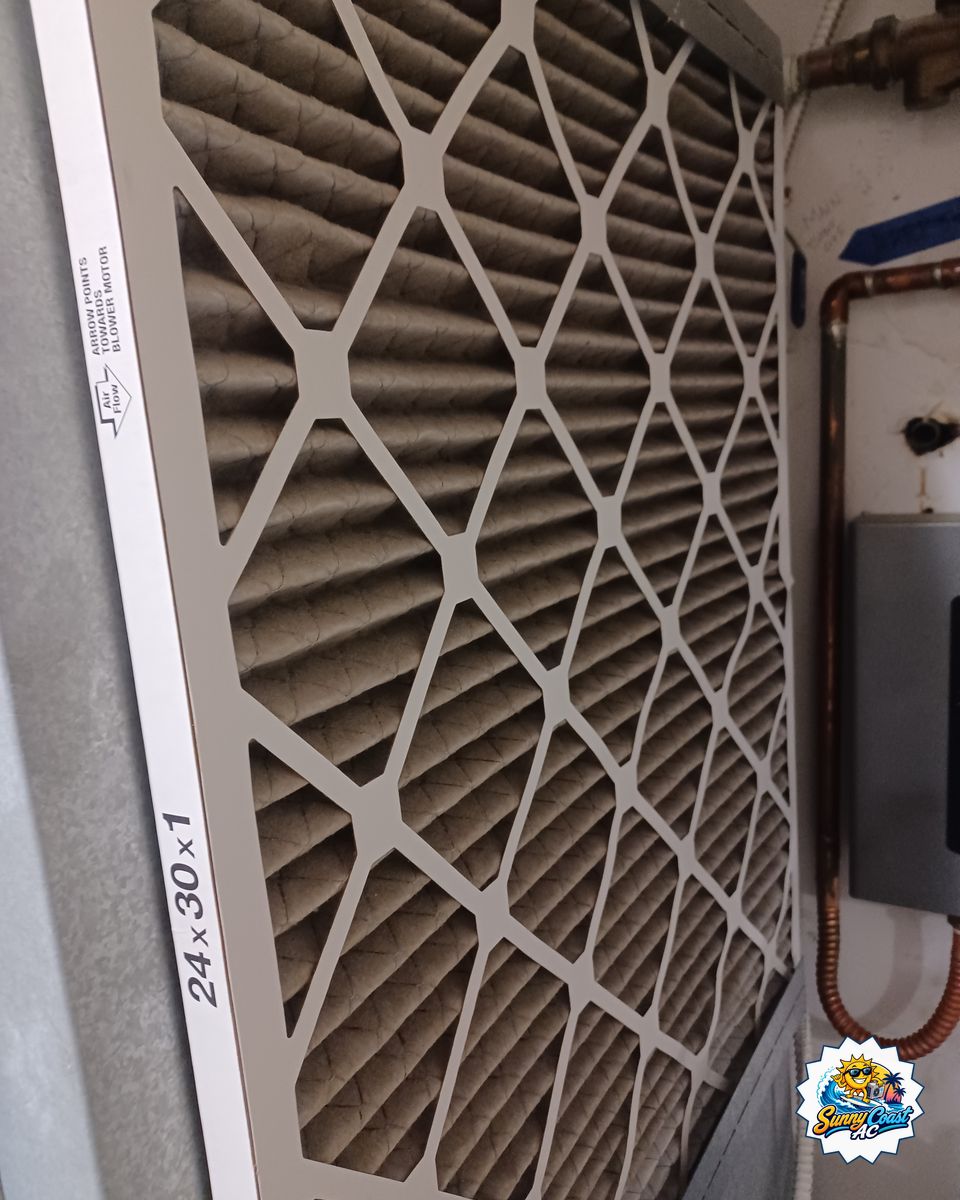
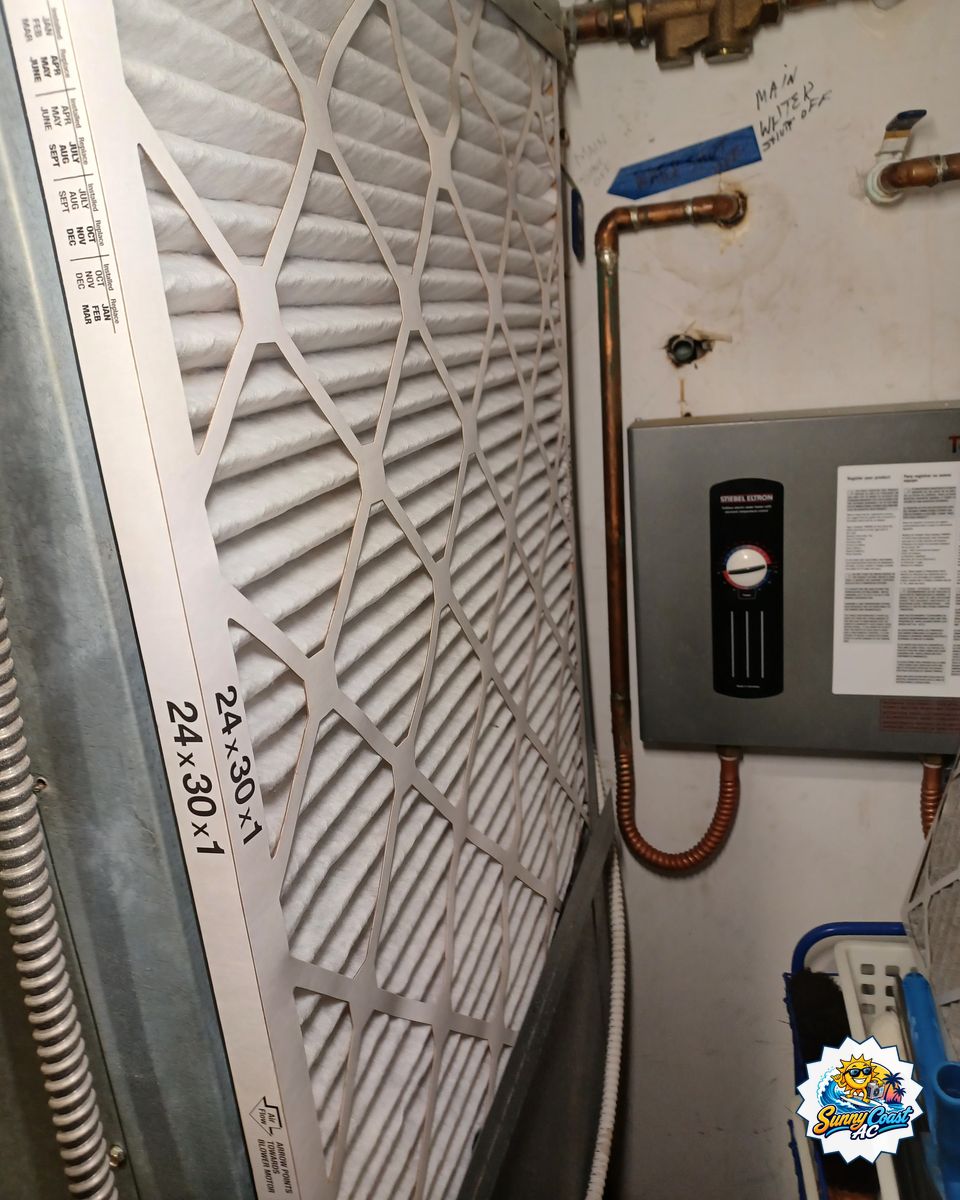
See ice on the indoor unit or on the copper pipes? Turn the AC off at the thermostat and call us. Don’t chip at the ice.
4. Make sure air can move
- Open the vents in every room. Closing a lot of vents doesn’t save money. It can make the system work harder.
- Clear the vents and the return grille. The return is the big grille where air goes back in. Move furniture, rugs, and boxes away from it.
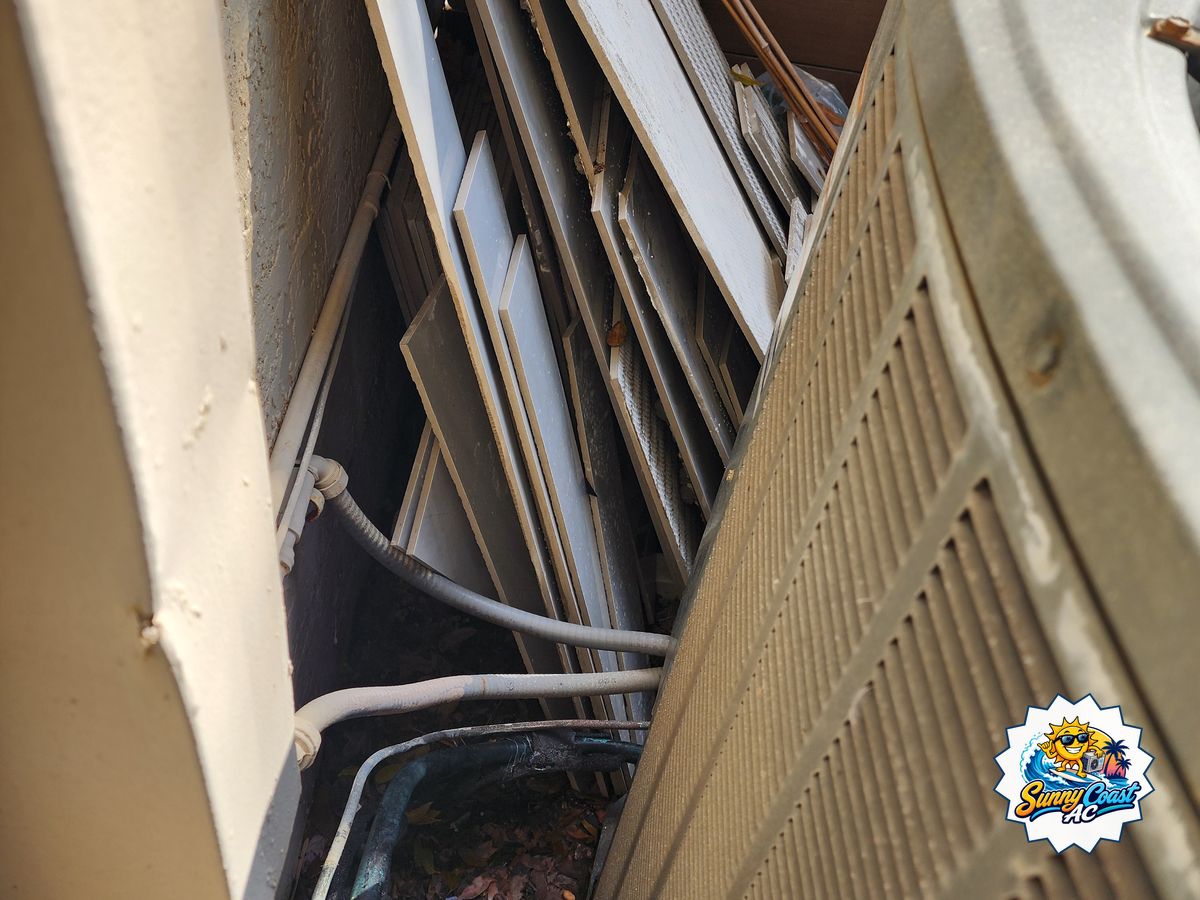
- Look at the outdoor unit. It needs about 2 feet of open space around it to push heat out. Move boxes, boards, and yard items away from it, and keep plants trimmed back. Look, but don’t open or touch the unit.
5. Look for water by the indoor unit
Did the AC shut off and won’t come back on? Look around the indoor unit. It’s usually in a closet, the garage, or the attic. Water in or around it can mean a clogged drain line.
Many systems have a small float safety switch. When the water gets too high, it turns the AC off so your home doesn’t flood. A clogged drain line was the #1 problem our techs fixed in 2025 and 2026.
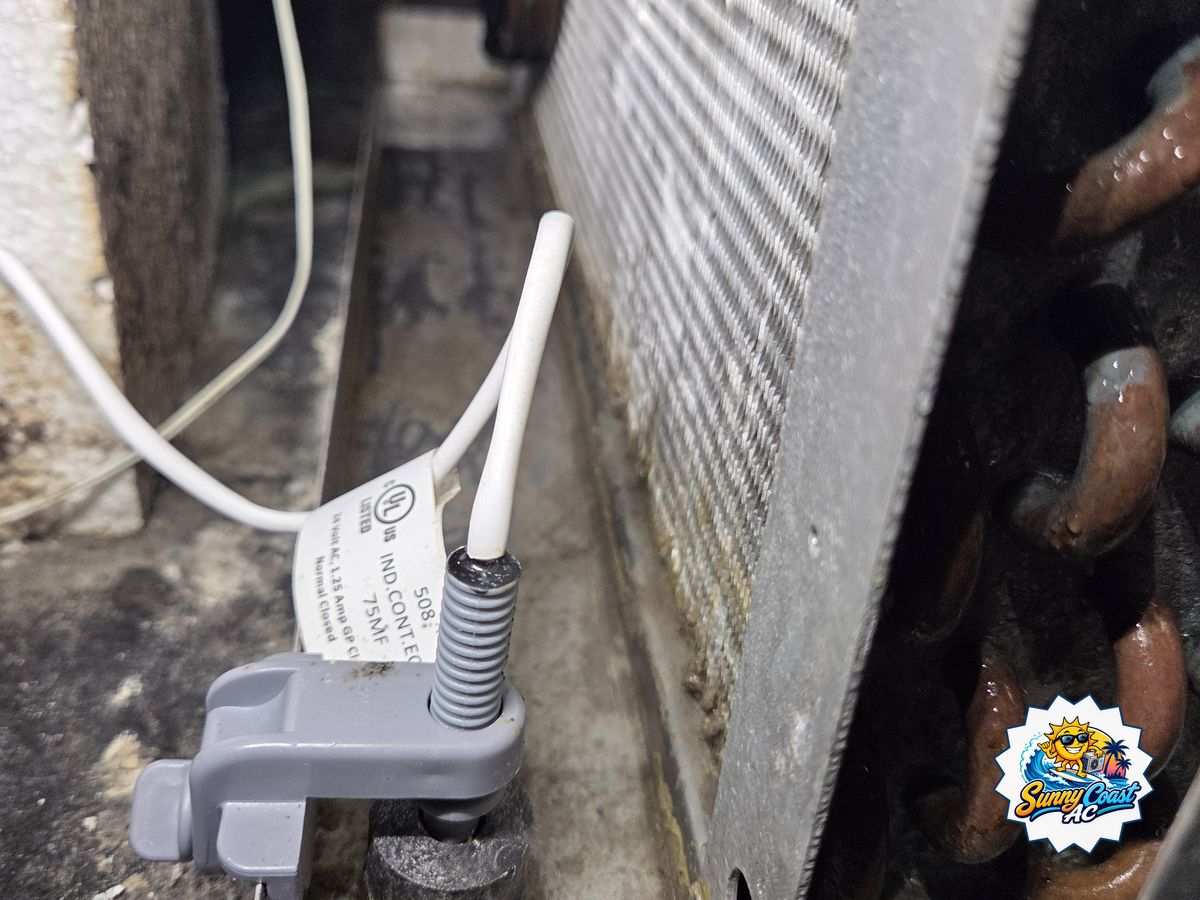
If you see water, turn the AC off at the thermostat, soak it up with towels, and call us. Don’t try to reset or bypass the switch. It’s doing its job. Learn more in our post on AC leaking water inside.
Small things add up
In our team’s records, dead thermostat batteries, wrong thermostat settings, a dirty air filter, or a tripped float switch came up more than 100 times. A few of those were easy fixes a homeowner could have checked first. The rest needed a pro, and that’s OK too.
Checked all 5 and still no cool air? Call or text us. We’ll help you figure out what’s next.
Call (786) 822-6861When to call a pro right away
- You smell burning or see smoke
- The outdoor unit hums or buzzes, but the fan doesn’t spin
- You see ice on the unit or the copper pipes
- Water is leaking, or there’s a wet spot on the ceiling
- The AC runs all day, but the house stays warm
- The AC keeps shutting off by itself
These are signs of an electrical, mechanical, or refrigerant problem. Please don’t open the unit or try to fix them yourself.
What happens when we come out
Every AC repair visit starts with a diagnostic visit, and it’s $0 to come out. It includes our 18-point check of airflow, electrical, refrigerant, drainage, and more. You only pay for the work you approve.
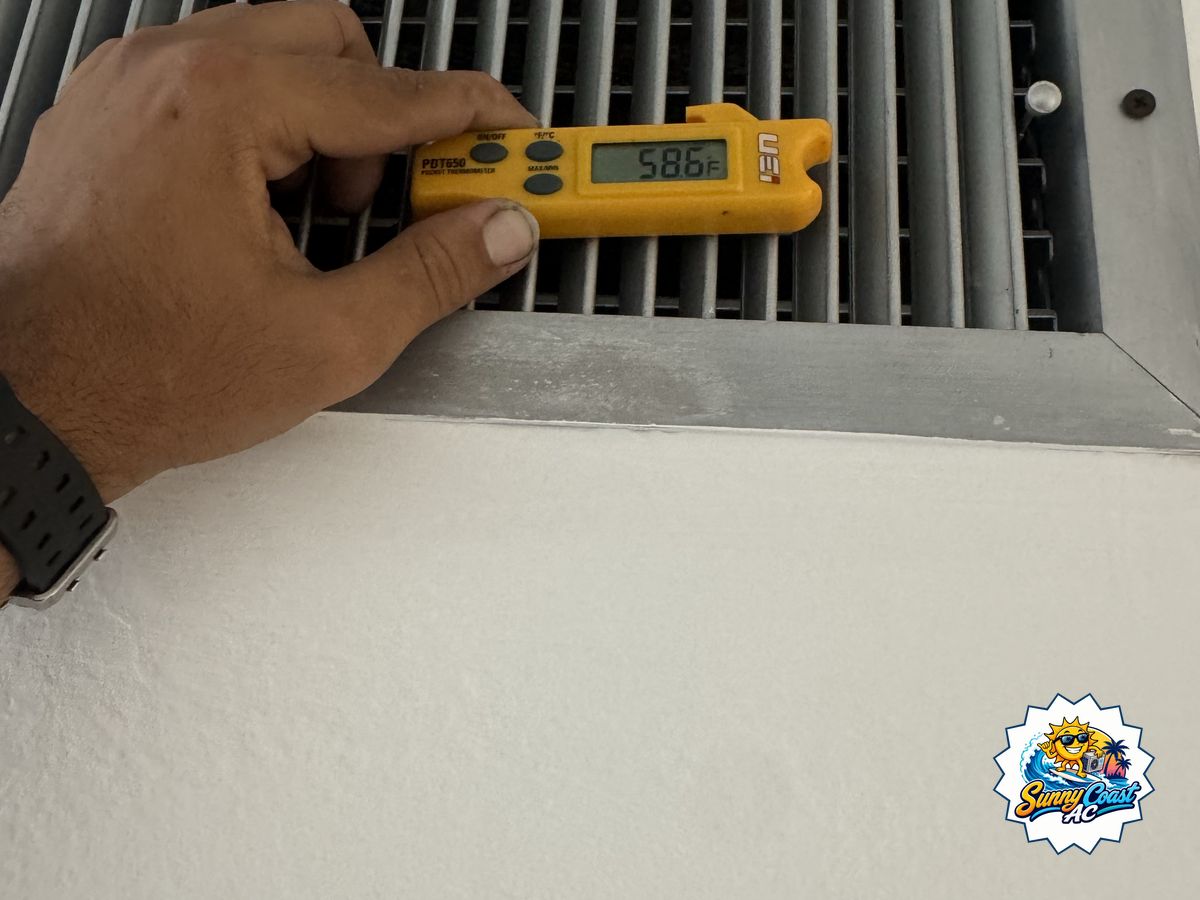
We show you what we found and give you a flat price in writing before any work. Decide not to repair? You owe nothing for the visit.
Already thinking about a new system? Ask us about a $0 in-home estimate for a new system install.
How to keep problems away
Two easy things you can do yourself:
- Change your air filter every 1 to 3 months. A clean filter helps your AC cool better and keeps dirt off the coil and out of the drain.
- Do a vinegar flush about once a month. Pour 1 cup of white vinegar into your drain line’s access port. That is usually a short white pipe with a cap, near your indoor unit. The vinegar helps stop algae from growing in the drain.
Before you pour: turn the AC off at the thermostat. Only do this when the drain is working. If water is already backing up, vinegar won’t clear it, so call us. Never mix vinegar with bleach or other cleaners.
Can’t find the access port? Ask our tech at your next visit, and we’ll show you.
Then, once a year, get a maintenance visit. We check the whole system before small problems turn into big ones.
See what our maintenance visit covers →
Job counts from our team’s records (3,027 finished AC jobs, January 2025 to November 5, 2026), as of November 5, 2026.